
$|
Full-Stack Developer building AI-powered products and production-ready web applications with MERN, AI/LLMs, and modern web technologies.
AI × Engineering × Product
rohan ∈ { full-stack, applied AI, production engineering }
I'm a Full-Stack Developer focused on building AI-powered products and production-ready web applications.
I work across the MERN stack, AI/LLMs, and modern web technologies — turning ideas into products that are fast, reliable, and built for real users. From RAG systems that make documents searchable and verifiable to full-stack platforms with authentication, payments, and optimized data layers, I enjoy solving problems across the entire stack.
At Renb Digital, I build and maintain applications for clients, working across development, performance, testing, and deployment. I've helped reduce page-load times by up to 30%, built automated testing with Playwright, and optimized databases through indexing, query optimization, and caching.
I'm particularly interested in the intersection of AI, product, and strong software engineering — building technology that is not only intelligent, but genuinely useful and dependable.
Full-stack, end to end
MongoDB schemas to React components — I own the whole vertical slice.
Applied AI, not hype
RAG pipelines, LLM integration, and systems that cite their sources.
Performance is a feature
Indexes, caching, and measured Lighthouse scores — not vibes.
Boring infrastructure wins
Auth, payments, email, idempotency — the stuff that matters at scale.
24 entries · sorted by frequency of use ↓
//Languages & Databases
//Frameworks & Libraries
//AI/LLM & Tools
total 2 · drwxr-xr-x rohan 2 roles
Full Stack Developer
Renb Digital
- Built and deployed responsive, scalable MERN apps across 5+ client projects, ensuring cross-browser compatibility while reducing page load time by up to 30%.
- Built automated unit and end-to-end test suites with Playwright covering core user flows.
- Designed and optimized MongoDB schemas with indexing strategies and caching layers to reduce database load and latency.
Graduate Apprentice Trainee Engineer
Hindustan Petroleum Corporation Limited
- Built internal web apps and real-time dashboards in React.js, automating reporting and reducing manual workload by 40% across departments.
- Performed data analysis and visualization with Python (NumPy, Pandas, Matplotlib) on operational datasets for department leads.
- Supported SCADA/PLC automation systems, contributing to reduced downtime.
3 projects · flagship case studies
?PDFChat
An AI system that lets you have a conversation with your PDFs — with citations, not hallucinations.
$ask("What causes inflation?")
retrieval → hybrid (cosine 40% + keyword 60%)
citations → 2 found, confidence 0.94
answer streaming via SSE, cited to p.42
$— 2 verified citations in 1.8s▋
// problem
Traditional PDF search fails at understanding context or relationships between concepts. Search returns keyword hits, not answers — and definitely not verifiable ones. PDFChat bridges that gap with semantic understanding so you can actually ask questions of a document and trust the response.
// architecture
- ›Frontend: React 19 + TypeScript + Vite
- ›Backend: Express + TypeScript
- ›Metadata: SQLite
- ›Generation: Google Gemini API (2.5 Flash/Pro, switchable)
// highlights
Custom hybrid search algorithm
# the differentiator — beats pure vector search
Combines cosine similarity (weighted 40%) with keyword matching (weighted 60%) for more relevant retrieval than pure vector search.
Context-preserving chunking
# keeps meaning across page boundaries
1000-character chunks with 100-character overlap to preserve context across page/section boundaries; embeddings generated in batches of 5 to respect API rate limits.
Verifiable, streaming answers
# answers you can defend
Streaming responses via Server-Sent Events, with citation parsing and confidence-scored source attribution so answers are verifiable, not just plausible.
Multi-document mode
# one PDF or the whole library
Query a single PDF or an entire collection of documents.
// stack
?Binkey-It
A production-grade grocery-delivery e-commerce platform — the boring infrastructure work that actually matters at scale.
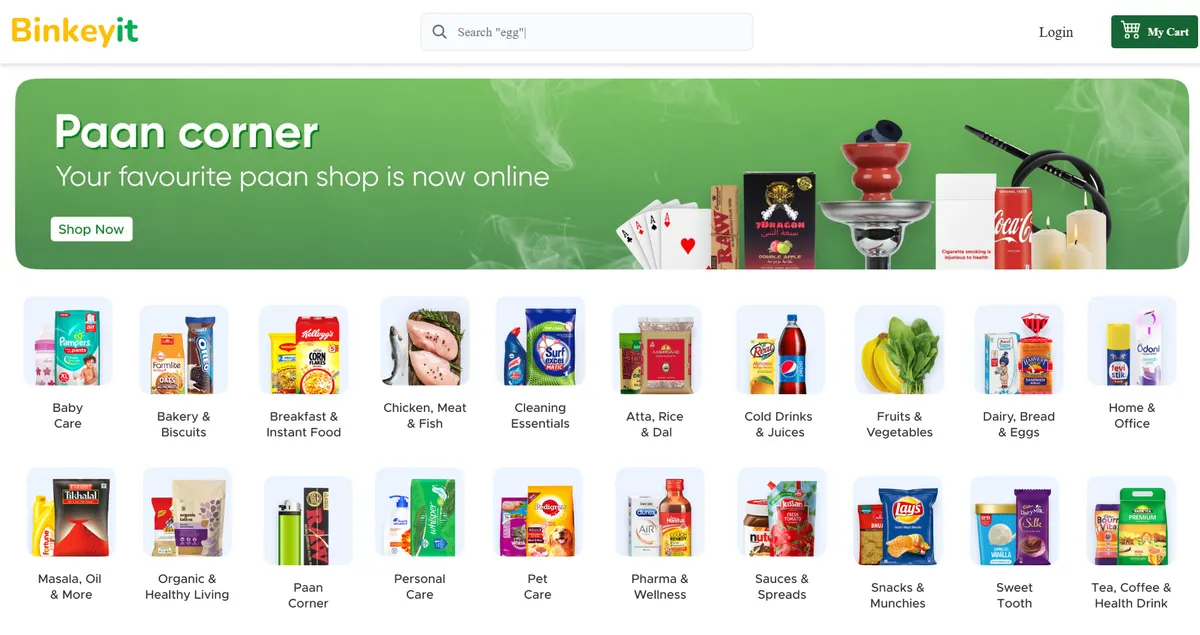
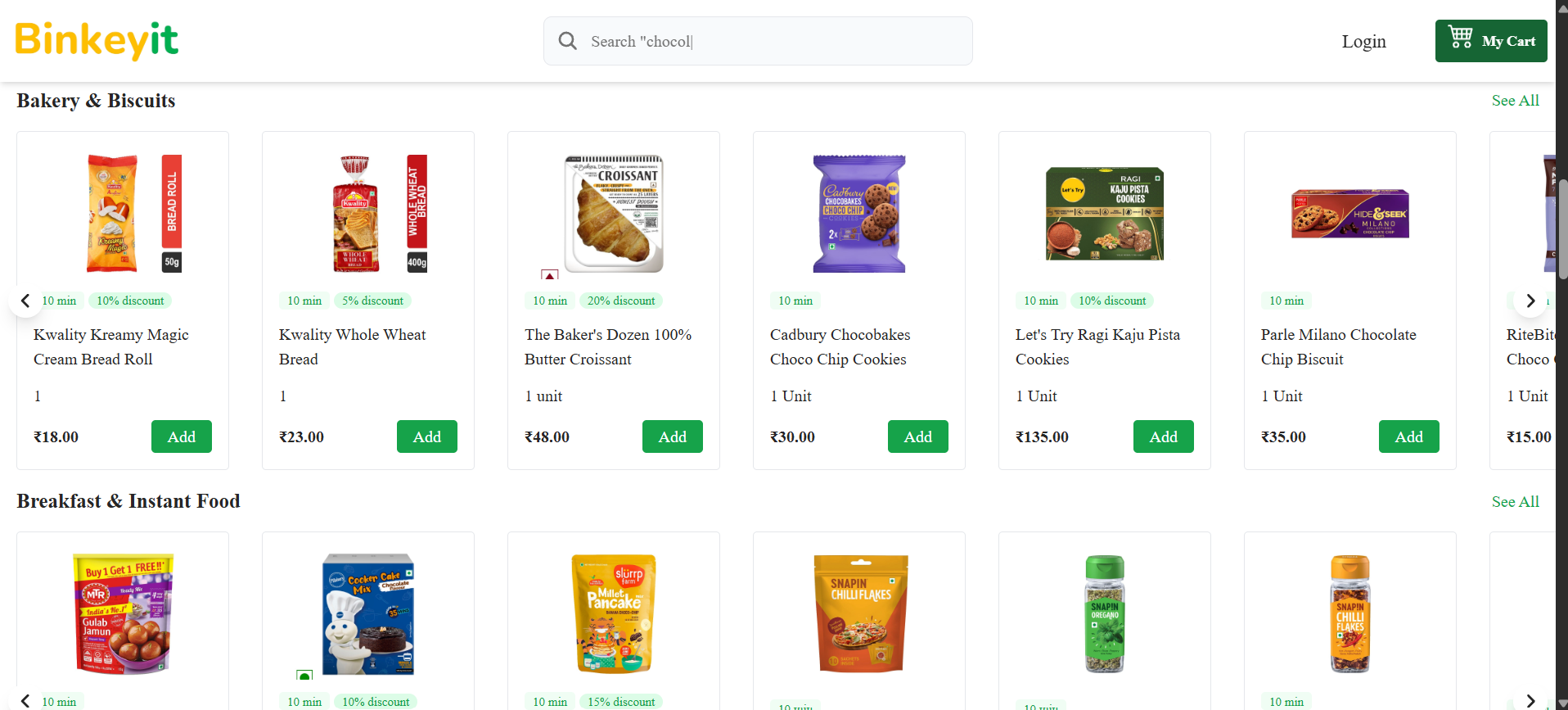
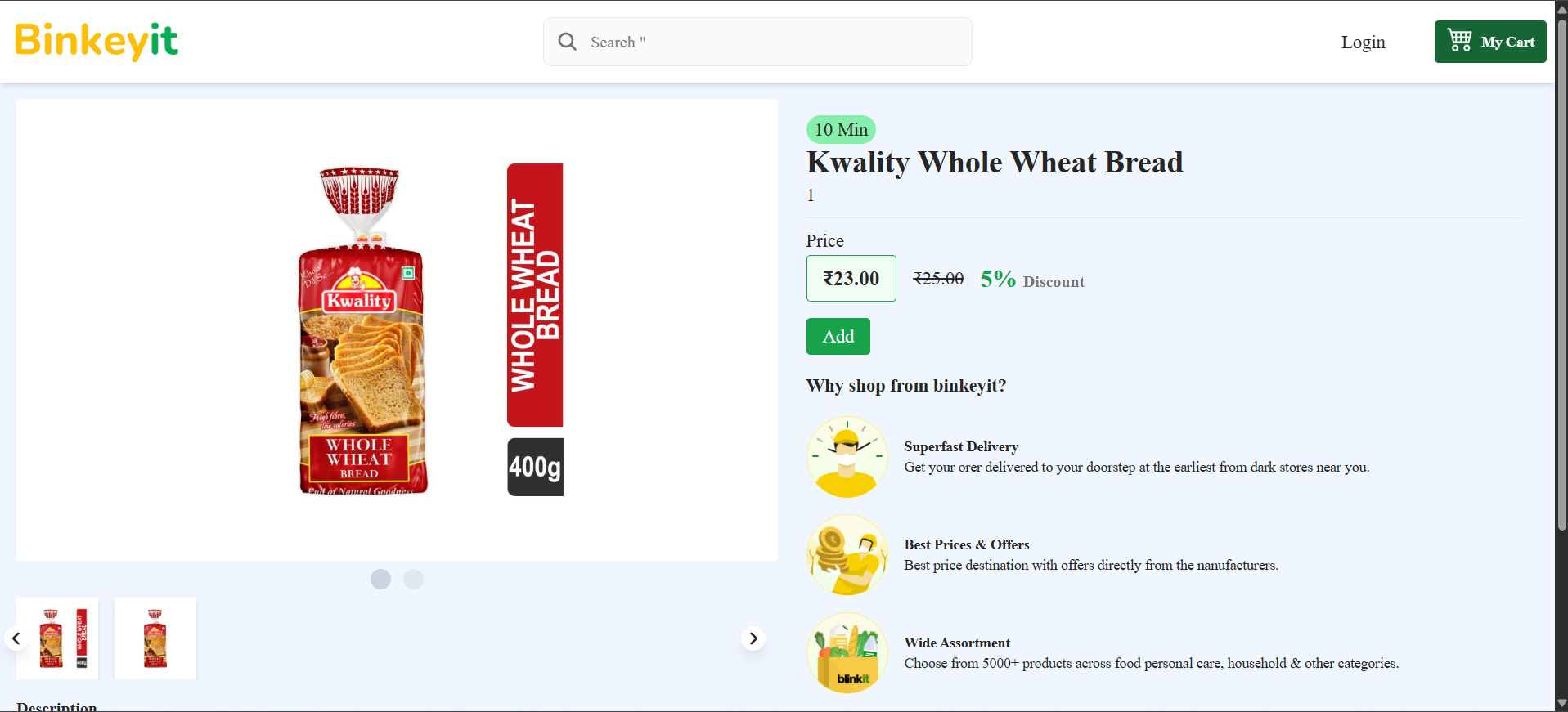
// problem
E-commerce clones are easy to demo, hard to make real. The hard part isn't the storefront — it's authentication, reliable payments, database performance under load, and email that actually arrives. Binkey-It is built around the infrastructure decisions that separate a prototype from a production system.
// architecture
- ›Frontend: React 19, Redux Toolkit, Vite, Tailwind
- ›Backend: Node/Express, MongoDB + Mongoose
- ›Payments: Stripe + Razorpay
- ›Media: Cloudinary
- ›Email: Resend
// highlights
Database query optimization
# 8× faster queries, no sacrifice
1200ms → 150ms
Fixed N+1 queries with Mongoose populate(), added indexes on frequently queried fields, added pagination. Query time dropped from 1200ms to 150ms.
State management
# memoized, not magic
~35% fewer re-renders
Restructured Redux into feature-based slices with memoized reselect selectors → ~35% reduction in unnecessary re-renders.
Image upload performance
# client-side signed uploads
~60% faster
Moved to client-side signed uploads direct to Cloudinary instead of routing through the backend → ~60% faster uploads, less backend load.
Email reliability
# no more ghost emails
99.5% delivery
Replaced Nodemailer/Gmail with the Resend API and retry logic → 99.5% delivery rate.
Security & payments
# idempotent, signed, verified
JWT access/refresh token rotation, HTTP-only cookies (not localStorage), OTP email verification, idempotent payment processing with webhook signature validation to prevent duplicate orders on retry.
// measured performance
// stack
Want to see more of my work? github.com/RohanPengonda
channel open · usually reply within 24–48h
Send me a message
# Usually reply within 24–48 hours